
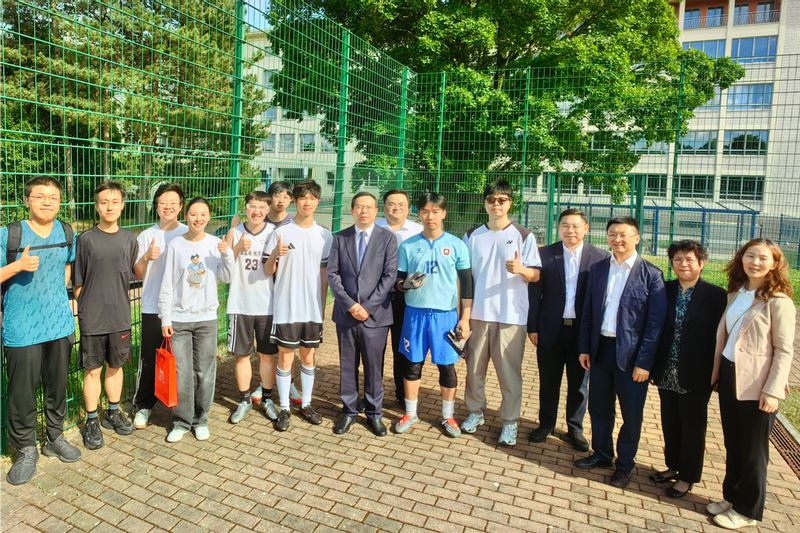
Recently, Wang Jun, Member of the Standing Committee of the Party Committee and Vice President, led a delegation to Spain and Germany for visits and exchanges. Heads of relevant units, including the Graduate Work Department of the Party Committee, the Graduate School, the Office of International Cooperation and Exchange, the School of Resources and Environmental Engineering, the School of Electrical and Information Engineering, and the School of Management, accompanied the delegation.
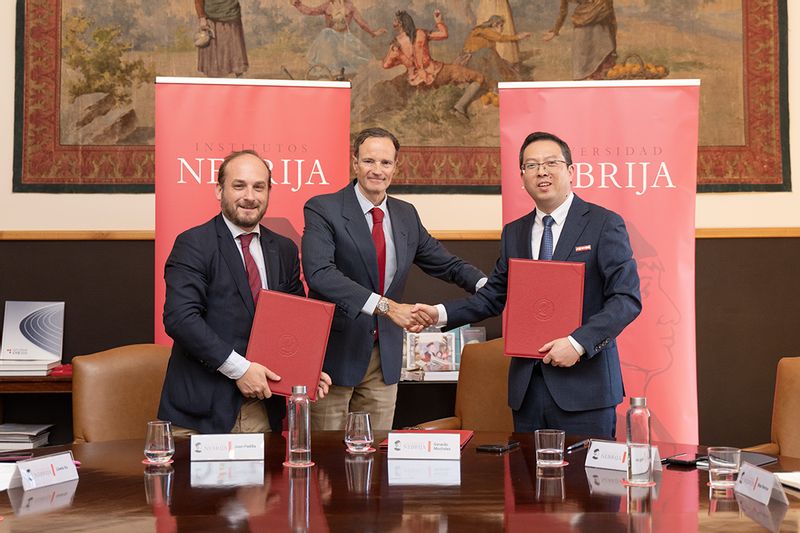
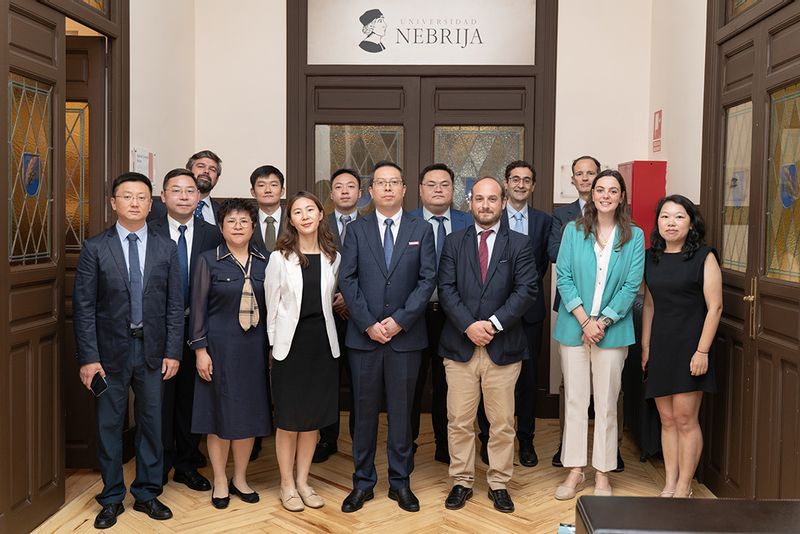
During the visit to Spain, the delegation visited Nebrija University. José Ortiz, President of the university, extended a warm welcome to the delegation and gave a detailed introduction to the university’s history, distinctive features, and internationalization. He said that the university would fully support joint talent cultivation with our university and, using this as a bond, promote in-depth cooperation between the two sides in multiple fields and at multiple levels. Wang Jun thanked Nebrija University for its warm reception and introduced our university’s distinctive features in internationalized education, as well as Changzhou’s strengths in fields such as intelligent manufacturing and new energy. He pointed out that China and Spain currently enjoy broad opportunities for cooperation in education, science and technology, and industry, and expressed the hope that both sides would seize these opportunities, focus on the core goal of cultivating application-oriented and innovative internationalized talent, and carry out practical, efficient, and mutually beneficial cooperation. A relevant official from the Education Section of the Chinese Embassy in Spain attended the talks, affirmed and congratulated the two universities on their efforts and initial achievements in China-Spain educational exchanges, and expressed the hope that both sides would continue to improve the quality and level of internationalized talent cultivation through practical measures such as aligning core disciplines, carrying out digital teaching, and promoting China-Spain industry-education integration. After the talks, the two universities signed a cooperation agreement and held in-depth discussions on the details of implementation, clarifying the path for advancing future cooperation.
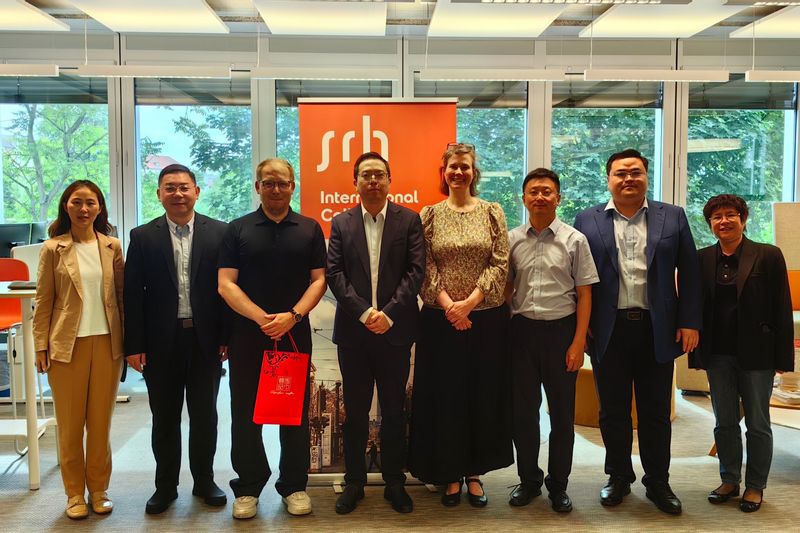
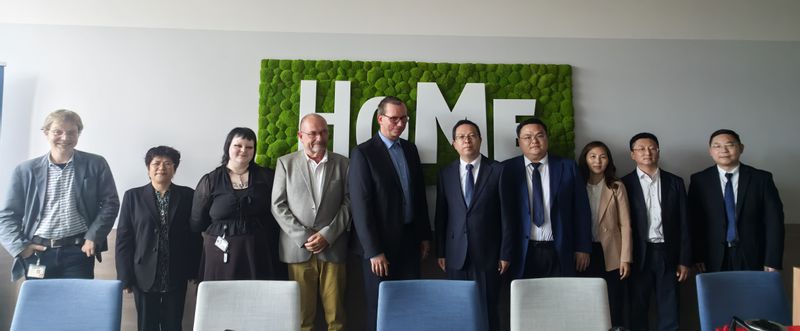
During the visit to Germany, the delegation successively visited Heidelberg University of Applied Sciences and Merseburg University of Applied Sciences, and held in-depth discussions with the leadership, heads of international offices and schools of international education, and professional teachers of the two universities on improving the management of cooperative education programs, optimizing program talent training plans, strengthening German and English language teaching, and enhancing pre-departure education for students going abroad. During the visit, the delegation also met with our university’s students studying in Germany. Through discussions, they learned about the students’ study and living conditions and helped the students communicate with the German side on issues such as the timing of certificate issuance and transportation and accommodation in Germany, effectively helping international students resolve difficulties and conveying the care of their alma mater.