
Overview
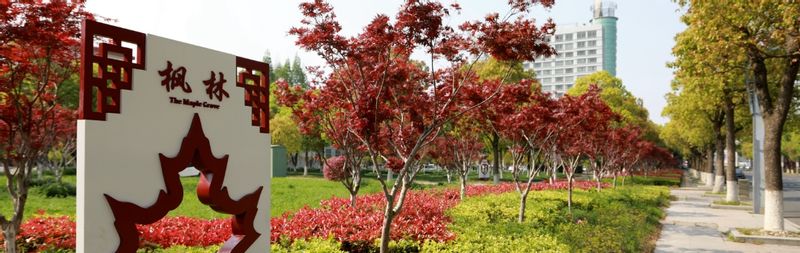
Jiangsu University of Technology (JSUT) is located in Changzhou, Jiangsu Province—a national historical and cultural city known as “the key hub of Central Wu and the capital of eight counties.” It is a provincial full-time regular higher education institution jointly established by Jiangsu Province and Changzhou Municipality. It is a construction unit for Jiangsu’s first-class application-oriented undergraduate universities, a master’s degree-granting institution, a project construction unit for doctoral degree-granting in Jiangsu Province, an institution rated “Excellent” in the Ministry of Education’s undergraduate teaching work level evaluation, one of the first national key construction bases for vocational education teacher cultivation and training, and one of Jiangsu Province’s first key research bases for decision-making and consulting.
The University grew out of Changzhou Vocational Teachers College, which was founded in August 1984 and began enrolling students in September 1985. In December 1987, it was renamed Changzhou Teachers College of Technology. In September 1988, it began enrolling undergraduate students. In April 2001, Changzhou Economic Management Cadre School was merged into the University. In August 2002, it was renamed Jiangsu Teachers College of Technology. In September 2004, Jiangsu Changzhou Accounting School was merged into the University. In October 2011, it was approved for the National Special Master’s Program, and in September 2012 it began enrolling students for professional master’s degrees. In November 2012, it was renamed Jiangsu University of Technology.
Adhering to the motto “Great Virtue, Extensive Learning, and Earnest Practice,” the University upholds the ethos of “seeking truth and encouraging innovation, and pursuing excellence,” carries forward the fine school spirit of “unity and diligence, truth-seeking and innovation,” and follows the development philosophy of “teachers and students first, colleges running the university.” It is committed to distinctive colleges, students with special strengths, disciplines with distinctive features, academic programs with distinctive characteristics, and scholarship with influence. It implements development strategies of open and cooperative education and university-city integration, brings together all its strength to deliver university education that is more suitable, higher in quality, more distinctive, and more mission-driven, and actively cultivates high-level application-oriented professionals and outstanding “dual-qualified” vocational education teachers.
The University has complete infrastructure and well-developed teaching and research conditions. It currently has nearly 23,000 full-time undergraduate students (including international students) and more than 1,600 master’s students (including international master’s students). It has more than 20 teaching and research units, including the School of Mechanical Engineering, the School of Electrical and Information Engineering, the School of Resources and Environmental Engineering, the School of Education, and the Department of Vocational Education.
The University implements the Action Plan for Attracting and Cultivating High-Level Faculty and is committed to building a high-level teaching force. It currently has more than 1,700 faculty and staff, including more than 1,300 full-time teachers. Among them, nearly 800 hold senior professional titles and more than 700 hold doctoral degrees; 57% of faculty hold doctoral degrees, and 63% are “dual-qualified” teachers. The University has one academician of the Canadian Academy of Engineering (dual appointment), two national-level talents, four recipients of the State Council Special Government Allowance, and one national-level vocational education teacher teaching innovation team. It has more than 260 person-times of high-level talents in Jiangsu Province, including recipients of the Jiangsu May 1 Labor Medal, Outstanding Contribution Experts, Entrepreneurship and Innovation Talents, the “Hundred Foreign Experts” Program, Distinguished Professors, the “333 Project,” Teaching Masters, the “Qinglan Project,” and Excellent Young Talents, as well as 16 provincial excellent teaching teams and science and technology innovation teams. It has been approved to establish a Provincial Master Teacher Studio for Ideological and Political Theory Courses in Universities, a Provincial Guidance Center for Building the “Dual-Qualified” Vocational Education Teaching Force, and a Provincial Research Base for Manufacturing Talent.
The University implements the Discipline Foundation Strengthening and Excellence Creation Project, promotes interdisciplinary integration, and has a relatively complete range of disciplines, a continuously optimized disciplinary layout, and distinctive disciplinary strengths. Its disciplines cover seven major categories: engineering, science, management, economics, literature, art, and education, forming a pattern of university development led by engineering and coordinated by multiple disciplines. It currently has 15 master’s degree authorization points and 12 provincial key disciplines during the 13th and 14th Five-Year Plan periods. Three disciplines—Engineering, Materials Science, and Chemistry—rank in the top 1% of the ESI global rankings. Closely aligning with national development strategies and regional development characteristics, the University has developed a number of leading disciplines such as Education and Mechanical Engineering, and has created distinctive highlights in vocational and technical education, green manufacturing and intelligent manufacturing, and resource recycling.
Focusing on the direction of industrial development and innovation across industrial chains, the University promotes industry-education integration and science-education convergence, and has made its program layout better optimized and more coordinated. It currently offers 70 undergraduate majors, with 10 national-level major construction projects (including first-class and distinctive majors) and 35 provincial-level major construction projects. Ten majors have been accredited by the Ministry of Education’s engineering education accreditation, three majors have passed the Ministry of Education’s teacher education program accreditation, and one major has passed the Yangtze River Delta New Liberal Arts program accreditation. It has two provincial excellent grassroots teaching organizations and one provincial virtual simulation teaching and research office. Building on provincial brand and distinctive majors such as Automotive Service Engineering and Electronic Information Engineering, the University has established two provincial key industrial colleges—the New Energy Vehicle Power Battery Industrial College and the Industrial Internet Industrial College—one provincial specialized college, the School of Artificial Intelligence, and nine university-level modern industrial colleges, including the Intelligent Healthcare Industrial College and the Inspection, Testing and Certification Industrial College.
The University implements the Action Plan for Improving the Quality of Undergraduate Education in the New Era and has a sound talent cultivation system. Adhering to the talent cultivation philosophy of “people-oriented, ability-focused, differentiated training, and all-round development,” it has steadily improved the quality of its independent talent cultivation. In October 2024, it underwent the Ministry of Education’s undergraduate education and teaching audit and evaluation. The University has won three First and Second Prizes in national teaching achievement awards and more than 20 provincial teaching achievement awards, including Special Prizes. It currently has 29 national and provincial talent cultivation platforms (projects), 10 national first-class (quality) courses, and 143 provincial projects (courses and textbooks), including Jiangsu first-class courses, demonstration courses for curriculum-based ideological and political education, industry-education integration courses, and planned (key) textbooks. Students have won more than 3,600 national and provincial awards in competitions such as the China International College Students’ Innovation Competition, the “Challenge Cup” National College Students’ Extracurricular Academic Science and Technology Works Competition, the “Challenge Cup” China College Students’ Entrepreneurship Plan Competition, the National College Students Mathematical Modeling Contest, and the National Undergraduate Electronic Design Contest. The University has cultivated and supplied more than 100,000 graduates for local economic and social development and trained nearly 70,000 secondary and higher vocational teachers and other professional and technical personnel. It has produced advanced models such as the National “Most Beautiful College Student,” “Star of Self-Improvement among College Students,” and the National “Xiaoping Science and Technology Innovation Team.”
The University implements the Action Plan for Reaching New Heights in Scientific Research and Innovation, strengthens collaborative innovation, and continues to enhance its contribution to scientific and technological innovation. In recent years, the University has won one Second Prize of the National Science and Technology Progress Award; five First, Second, and Third Prizes for Outstanding Achievements in National Educational Science Research; four awards from the Ministry of Education for Outstanding Scientific Research Achievements in Universities (Science and Technology, Humanities and Social Sciences); nine Jiangsu Provincial Science and Technology Awards; and more than 160 research achievement awards from national industry associations (societies). It has undertaken nearly 400 provincial and ministerial-level or above research projects, including National Science and Technology Major Projects, National Key R&D Programs, National Natural Science Foundation projects, and National Social Science Fund projects, as well as more than 2,400 commissioned research projects. It has received more than 1,700 authorized invention patents and published more than 1,900 high-level academic papers, including a research paper in Science as first author and first affiliated institution. It currently has 27 provincial-level and above research platforms, including a national demonstration institution for technology transfer centers, a branch of the National University Science Park, the Jiangsu Provincial Research Center for Vocational and Technical Education Science, provincial engineering (technology research) centers, and provincial key (construction) laboratories in universities, as well as 36 municipal and departmental science and technology innovation platforms. Its high-quality decision-making and consulting outputs have received instructions from provincial Party leaders or been adopted by the provincial government, and it was named an Advanced Collective in Intellectual Property Work among Jiangsu Universities.
The University implements the Action Plan for Collaborative Development through Open Education and has established a multi-channel, multi-field pattern of international cooperation and exchange, forming an internationalization feature centered on Sino-German cooperation and coordinated with multiple countries. It has established close cooperative relations with more than 90 universities, educational institutions, and research institutions in more than 20 countries and regions. It currently has three Ministry of Education-approved undergraduate Sino-foreign cooperative education programs and five joint training programs with mutual recognition of credits between Chinese and foreign institutions, and has been approved for construction projects such as provincial 14th Five-Year Plan brand majors for internationalized talent cultivation in universities and international cooperation joint laboratories. It has joined cooperative alliances such as the China-U.S. Talent Training Program, the Sino-Finnish University of Applied Sciences, the Jiangsu-Korea Universities Alliance, the Jiangsu-Hong Kong-Macao Universities Alliance, the China-Arab Universities 10+10 Cooperation Plan, the Sino-German University of Applied Sciences, and the Sino-German Industry-University-Research-Application Innovation Consortium. It serves the high-quality development of the Belt and Road Initiative and enrolls international students from more than 40 countries. It has been approved to establish the Zheng He College of Jiangsu University of Technology in Kazakhstan. The University pursues high-quality development of continuing education, improves its continuing education services, provides targeted assistance to support vocational education development in western China, and has been approved as one of the first national training bases for “dual-qualified” vocational education teachers.
The University comprehensively promotes university-city integration, serves local economic and social development in all respects, and has created a distinctive “JSUT model” of university-city integrated development. Together with Changzhou Municipality, it has established Jiangsu’s only pilot zone for collaborative innovation in vocational education teacher education, has been approved to establish the Vocational Education Research Institute of the Suzhou-Wuxi-Changzhou Metropolitan Area, and actively serves the building of a model highland for high-quality development. Focusing on Changzhou’s leading industries and economic and social development fields, it has established multiple research and think-tank platforms, including the Changzhou Research Institute of Carbon Fiber Composite Forming and Equipment, the Changzhou Research Institute of Intelligent Control and Manufacturing Systems, the Changzhou Family Education Research Institute, the Changzhou Youth Psychological Research and Guidance Center, and the Changzhou Culture and Tourism Research Institute. It has jointly built multiple provincial teaching platforms with well-known Changzhou enterprises, including the Industry-Education Integration Base for Innovative Talent Cultivation in New Energy Vehicle Power Batteries. The University actively implements the “University-City Integration Plus” initiative, has established strategic university-local government cooperation relations with more than 10 cities (districts) inside and outside Jiangsu Province, and has jointly built four “micro-campuses,” more than 230 industry-university-research bases, and more than 40 research institutions.
The University has received titles such as National Advanced Collective in Language and Writing Work, National May Fourth Red Flag Youth League Committee, National Advanced Unit in College Students’ Summer Social Practice Activities, National Model Workers’ Home, cultivation and establishment unit for national and provincial Party building model branches, national and provincial special action team for “Strengthening the Nation” led by “dual-leader” teachers serving as Party branch secretaries in universities, one of Jiangsu’s first benchmark departments in Party building, Advanced Grassroots Party Organization in Jiangsu Universities, Jiangsu Civilized Campus, Harmonious Campus of Jiangsu Universities, Advanced Collective in Ideological and Political Education in Jiangsu Higher Education Institutions, Advanced Collective in Educational Research in Jiangsu Province, Excellent Management Unit for Faculty Work in Jiangsu Undergraduate Institutions, Advanced Collective in Graduate Employment Work in Jiangsu Universities, Demonstration University for Entrepreneurship Education among Jiangsu College Students, and Advanced Unit in Foreign-Related Education in Jiangsu Province.
As it advances into the 15th Five-Year Plan period and looks to the future, the University will uphold and strengthen the overall leadership of the Party, anchor itself to a new pattern of university development featuring “one university with two campuses, first-class with dual excellence, integrated advancement with dual progress, and integrated development with dual highs,” focus on the new orientation of integrated, distinctive, intelligent, and international development, and strive to become a main provider of region-leading application-oriented talent, a magnet for high-level talent, a source of scientific and technological innovation, a demonstration site for integrated development, and an innovation hub for cultural inheritance. With the responsibility of taking the lead and setting an example, it will forge ahead with determination and perseverance and work together to accelerate the building of a distinctive first-class application-oriented university. (October 2026)
